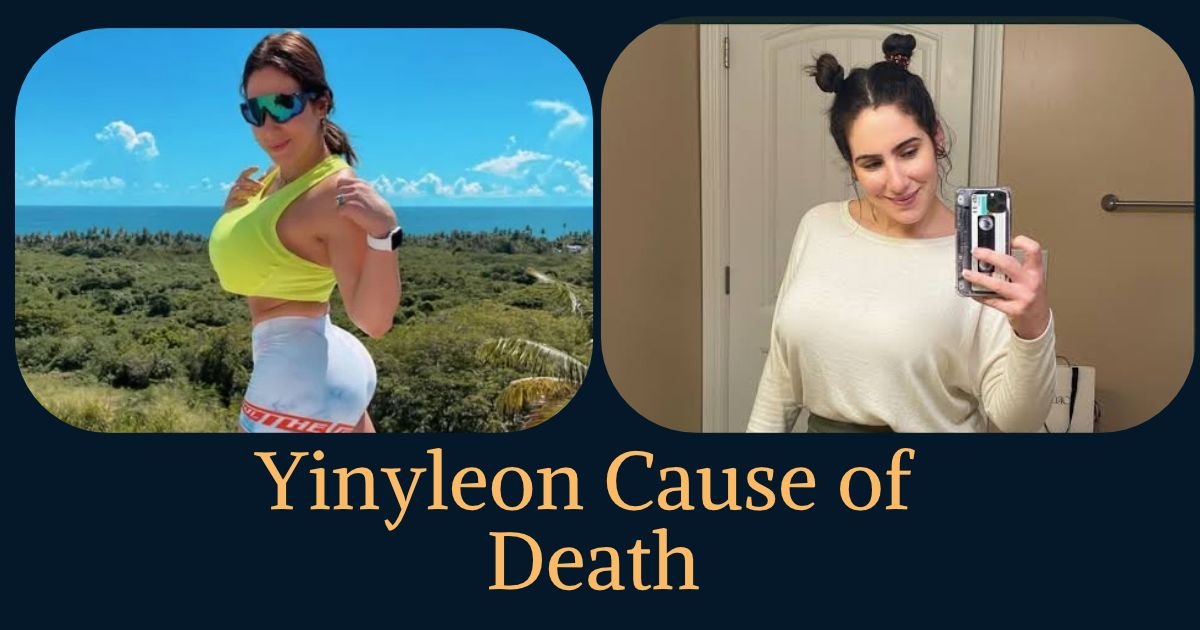
Is Yinyleon dead? No. There is no credible report, family statement, or official record confirming her death. The “cause of death” stories you see online come from clickbait sites and fake social media videos. This guide explains where the rumor began, why it keeps spreading, and how you can check any death claim yourself.
Profile Summary
| Detail | Information |
| Name | Yinyleon (also written Yiny Leon, Yiny León, or YinyLeon) |
| Listed birth date | June 1, 1984 |
| Age in October 2026 | 42 |
| Birthplace | Puerto Rico |
| Profession | Online content creator, model, social media personality |
| Main platform | Instagram (@yinyleonofficial) |
| Death status | No credible report of death |
| Cause of death | None, because there is no verified death |
Who Is Yinyleon?
Yinyleon is a Puerto Rican born online creator who built her audience through adult oriented content and social media. Public profiles list her name as Yiny León. The one word spelling is simply that name joined together.
She is often seen in content with her partner, known publicly as Leon. Her fan base grew mostly through Instagram, short video clips, and fan platforms. Like many creators, she keeps much of her private life away from the public.
That matters here. When a creator shares little personal detail, bad actors find it easy to invent stories about them.
Why People Search for Yinyleon Cause of Death
People type this phrase for a few simple reasons:
- They saw a shocking video or post claiming she died.
- They noticed she was less active online for a short time.
- A search suggestion or “People also ask” box showed a death related phrase.
- They found a blog headline that sounded like confirmed news.
Search suggestions do not prove anything. Search engines suggest phrases that many people have typed, not phrases that are true. One viral hoax can push a false phrase into suggestions for months.
Is Yinyleon Dead?
No, there is no evidence that Yinyleon is dead. As of October 2026, no major news outlet, family member, or official source has reported her death.
Here is what supports that conclusion:
- No obituary or funeral notice exists.
- No police, hospital, or coroner statement has been published.
- Her official social media presence has not been replaced by memorial posts from family.
- The websites claiming a death do not agree with each other.
That last point is the strongest clue. If she had really died, every report would share the same basic facts. Instead, the spam pages describe a reggae artist from Jamaica, a 24 year old TikToker, and a woman with a rare cancer. These cannot all be true, and none of them match her real profile.
The Truth About the Cancer Rumor
The cancer claim is one of the most repeated stories. It is also one of the weakest.
Where the Cancer Claim Started?
The cancer story appears to come from content farms. These are websites that publish hundreds of articles using one template and swap in a trending name. When a name starts trending, they generate a fake “tribute” or “battle with illness” article to catch the search traffic.
Common signs of this template include:
- Unfilled brackets such as “[type of cancer]” left in the text
- Generic phrases about “courage” and “a strong support system”
- General cancer awareness facts that have nothing to do with the person
- No dates, no hospital names, and no quotes from real people
Why the Claim Does Not Hold Up?
A real diagnosis story has details that can be checked. The cancer claim has none. Here is why it fails:
- No source. No doctor, family member, or representative ever spoke about an illness.
- No timeline. The articles never say when she was diagnosed or treated.
- Conflicting versions. Other pages blame a car crash, a heart attack, or a mental health crisis. A person cannot die of all of these.
- Wrong identity. Many of these pages describe a different person entirely.
Cancer is a serious disease that affects many families. Using it as clickbait for a person who has not announced any illness is both false and unkind.
The TikTok Death Hoax Problem
Some of the rumor traffic comes from short videos on TikTok and similar apps. These clips often use dramatic music, a black and white photo, and a caption like “R.I.P.” with no proof.
How These Hoax Videos Are Usually Made
Most follow the same simple recipe:
- Pick a name that already gets a lot of searches.
- Add a sad song and a candle or “rest in peace” graphic.
- Overlay text such as “She is gone” or “Sad news.”
- Use hashtags tied to the person’s name to reach her fans.
- Link to a blog or profile that earns money from clicks.
The creator of the video usually knows nothing about the person. The goal is views, not truth.
Why These Videos Spread So Fast
Several things help them travel:
- Emotion beats logic. Shock and sadness make people share before they check.
- Algorithms reward engagement. A video with thousands of comments gets pushed to more people, even if the comments say “Is this real?”
- Short format hides details. A 10 second clip has no room for sources.
- Fans repost out of care. Many people share “just in case,” which gives the hoax more reach.
What About the Autopsy Claim?
You may also see the phrase “Yinyleon cause of death autopsy results.” This is another search trap.
An autopsy is a medical examination done after a death, usually ordered by a coroner or medical examiner. The report goes to the family and, in some cases, to authorities. Since there is no verified death, there is no autopsy.
Pages using this phrase usually do three things:
- Repeat the keyword many times without giving a single finding
- Show a vague image of a document with no name or case number
- Promise “results” in a headline but deliver only general text
If a page claims to have autopsy results, ask which medical office released them. If it does not say, the claim is empty.
Why Death Hoaxes Keep Happening?
Death hoaxes are not new. They have targeted actors, singers, athletes, and online creators for decades. They keep returning because they work.
The main drivers are:
- Money. More clicks mean more ad income for the site owner.
- Easy tools. Anyone can now generate fake posts, fake screenshots, and bulk articles in minutes.
- Name confusion. Creators with unusual or variable spellings, like Yinyleon and Yiny Leon, are easy to mix up with other accounts.
- Low risk. Few hoax makers face any penalty.
- Pranks and trolling. Some people simply enjoy watching a lie spread.
How to Check If a Death Report Is Real?
Use this quick checklist before you believe or share any death news:
- Look for a primary source. A family statement, an official social media post from a representative, or a police or hospital notice counts. A random blog does not.
- Check trusted news outlets. Real celebrity deaths are covered by several established news organizations at once.
- Visit her verified accounts. Look for recent posts and any message from her team.
- Scan the article for placeholders. Text like “[Date]” or “[Cause]” means the page is a template.
- Compare details. If sources disagree on age, country, or career, treat them as unreliable.
- Run a reverse image search. Fake posts often reuse old photos from unrelated events.
- Check the date. Old rumors get reposted as if they were new.
- Wait before sharing. Real news will still be real in an hour.
You can also type her name plus “official statement” into a search engine. If no real statement appears, the claim is almost certainly false.
The Real Harm of False Death Reports
It is easy to think a rumor is harmless. It is not.
- Distress for the person. Seeing your own “death” trending is upsetting and can hurt your reputation.
- Pain for family and friends. Loved ones may receive worried calls and messages.
- Mental health impact. Online harassment and constant rumor cycles can wear down a creator.
- Lost trust. When people share too many false alarms, they start to ignore real news.
- Scam risk. Hoax pages often carry harmful links, fake donation requests, or tracking scripts.
Sharing a rumor feels small, but it adds to a bigger problem. A better habit is to pause, verify, and only pass on what you can confirm.
Why This Topic Still Trends in 2026?
The Yinyleon death rumor keeps resurfacing for a few reasons. First, older spam pages remain indexed, so they keep appearing in search results. Second, new pages are created each time the name spikes in interest. Third, AI tools make it cheap to produce hundreds of near identical articles, which spreads the false claim wider.
There is another factor. When people search, they often click the most dramatic headline. That sends a signal to search engines that the topic is popular, which can lead to even more spam. The cycle feeds itself.
This is why a clear, fact based answer matters. The more reliable pages that explain the truth, the harder it is for hoaxes to dominate results.
What Is Actually Confirmed?
Here is a simple, honest summary of what we can and cannot say.
Confirmed or widely listed:
- Her professional name is written Yinyleon, Yiny Leon, or YinyLeon.
- Public profiles list her birth date as June 1, 1984, which makes her 42 in 2026.
- She is identified as Puerto Rican born.
- She is a content creator with a large Instagram following.
- She has a partner known as Leon who appears in some of her work.
Not confirmed (and unsupported by any credible source):
- Any death
- Any cause of death, including cancer, accident, or illness
- Any autopsy report
- Any link to reggae music or a Jamaican background
- Any claim that she was a 24 year old TikTok creator
If real news ever changes this, it will come from her own accounts, her family, or major news outlets, not from anonymous blogs.
Fun Facts About Yinyleon
- Her name has at least four common spellings, which makes search results messy.
- She turned 42 in June 2026, based on her listed birth date.
- Spam pages have mixed her up with musicians, gamers, and unrelated influencers.
- Her story is a textbook case of how a keyword, not a real event, can create a fake news cycle.
- Her Instagram handle, @yinyleonofficial, is the clearest place to see her real activity.
FAQ’s
Is Yinyleon dead or alive?
There is no credible evidence that she has died. All verified information points to her being alive.
What is the Yinyleon cause of death?
There is none. No death has been confirmed, so any stated cause is invented.
Did Yinyleon die of cancer?
No. The cancer claim comes from template spam pages with no source or medical detail.
How old is Yinyleon in 2026?
She is 42, based on her listed birth date of June 1, 1984.
Where is Yinyleon from?
She is publicly identified as being born in Puerto Rico.
Is there an autopsy report for Yinyleon?
No. An autopsy only follows a death, and no verified death exists.
Why do fake death rumors spread so quickly?
Shocking news triggers fast sharing, and algorithms reward posts that get many reactions.
How can I verify a celebrity death report?
Look for an official family statement and coverage from several trusted news outlets.
Is the TikTok video about her death real?
Most such videos are engagement bait with no source, so treat them as false unless proven.
Conclusion
The search for “Yinyleon cause of death” leads to a simple answer: there is no cause of death because there is no verified death. The cancer story, the autopsy claim, and the TikTok videos all fall apart when you look for real sources, real dates, or real names.
What remains is a clear lesson about modern misinformation. Clickbait sites and fake videos use emotion to win attention, and a few quick checks can stop them. Look for primary sources, compare details, and wait before sharing.
If you want the truth about any public figure, rely on official accounts and trusted news. Doing so protects the person being talked about and keeps you from spreading something false.

Lucas Bennett is the founder and administrator of GrammarHexa, a platform dedicated to helping learners improve their English grammar and writing skills. With a passion for language education, Lucas creates clear, practical, and easy-to-understand content covering grammar rules, sentence structure, punctuation, and effective communication.






Leave a Reply